







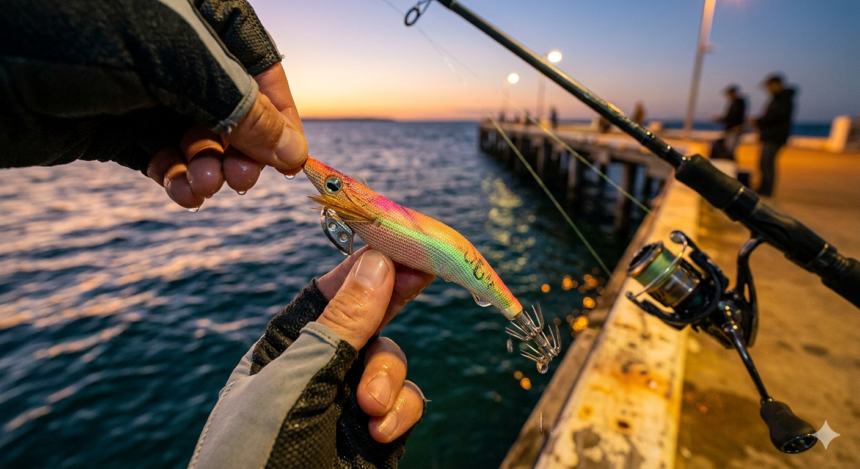
If you’ve ever walked along a Mediterranean pier at dusk, you’ve likely seen anglers intently twitching their rods under the glow of streetlights. More often than not, they are using a specialized tool known as a calamariere. While the term might sound exotic to the uninitiated, it is a cornerstone of coastal fishing culture in Europe, particularly in Italy and Greece.
A calamariere is essentially a squid jig—a lure specifically designed to mimic the movement and appearance of small prey like shrimp or sardines to attract cephalopods. Unlike standard fish lures that use traditional hooks, these jigs feature a unique crown of sharp, barbless pins designed to snag the soft tentacles of a squid.
In this comprehensive guide, we will dive deep into the world of the calamariere. We’ll explore its history, the various types available on the market, and the professional techniques you need to employ to ensure your next fishing trip is a success.
The Etymology and History of the Calamariere
The word calamariere finds its roots in the Italian language, derived from “calamaro,” which means squid. Interestingly, the word calamaro itself can be traced back to the Medieval Latin calamarium, meaning “ink pot” or “pen case” (Merriam-Webster, n.d.). This is a poetic nod to the ink-secreting abilities of the cephalopod.
Historically, catching squid was a matter of survival and local trade. Early versions of the calamariere were handcrafted from wood, with hand-straightened pins bundled at the base. Anglers would often wrap these wooden frames in cloth or even fish skin to provide a more natural texture. Today, while the basic shape remains, the technology behind the calamariere has evolved into a high-tech industry involving glow-in-the-dark plastics, holographic foils, and precision-balanced weights.
Different Types of Calamariere Lures
Choosing the right calamariere isn’t just about picking a pretty color. Different environments and species require specific designs to be effective.
1. Traditional Cloth-Wrapped Jigs
These are perhaps the most common. The body is covered in a fine, textured fabric that feels “organic” to a squid when it grabs the lure. This texture is vital because squid are tactile hunters; if a lure feels too much like hard plastic, they may release it before you can set the hook.
2. EGI Jigs (Shrimp Style)
Originating from Japan but now used globally, “Egi” style lures resemble a shrimp. They feature a lead weight under the “head” (the chin sinker) which allows them to dive at a specific angle. A high-quality calamariere of this style is balanced to sink at a rate of roughly 3 to 5 seconds per meter.
3. Trolling Calamariere
Used primarily from boats, these are designed to be pulled behind a moving vessel. They often have a small diving lip, similar to a standard crankbait, allowing them to reach specific depths where larger squid might be roaming (Decathlon, n.d.).
4. Metal and Weighted Jigs
For deep-sea fishing or areas with strong currents, a weighted calamariere is necessary. These are often streamlined to drop quickly to the “strike zone” before the current sweeps the line away.
How to Choose the Best Calamariere for Your Needs
Success on the water starts with your tackle box. When selecting your calamariere, consider the following three factors:
-
Size: Most jigs are measured in numbers like 2.0, 2.5, 3.0, and 3.5. A smaller calamariere (2.0–2.5) is ideal for calm waters or smaller autumn squid. Larger sizes (3.5) are better for winter fishing when the squid are larger and more aggressive.
-
Color Selection: A general rule of thumb is “bright day, bright color; dark day, dark color.” However, for night fishing—which is prime time for squid—pink, orange, and “glow-in-the-dark” (luminescent) models are the gold standard.
-
Weight: Ensure the weight of your calamariere matches your rod’s casting capacity. If the lure is too light, you won’t get any distance; if it’s too heavy, it will sink like a stone and likely get snagged on the sea floor.
Professional Techniques for Using a Calamariere
Simply throwing a calamariere into the water and reeling it in like a trout lure rarely works. Squid fishing is a game of rhythm and patience.
The “Jerking” Method
The most effective way to use a calamariere is the “jerk and release” technique. Cast your lure out and let it sink to the desired depth. Once there, give your rod two or three sharp upward twitches. This makes the calamariere dart like a panicked shrimp. After the jerks, stop and let the lure sink again. The strike almost always happens on the sink.
Fishing the Light
Squid are naturally attracted to light because it draws in the small baitfish they feed on. Focus your efforts around piers with floodlights or use a specialized submersible green light. Position your calamariere at the edge of the light’s shadow, as squid love to lurk in the darkness and ambush prey that wanders into the illuminated area.
Equipment You Need for a Calamariere Setup
While you can catch squid on a basic rod, a specialized “Eging” setup will drastically increase your catch rate.
| Equipment | Recommendation |
| Rod | 8’0” to 8’6” with a soft, sensitive tip to feel “light” bites. |
| Reel | 2500 to 3000 size with a very smooth drag system. |
| Line | Thin PE Braid (0.6 to 1.0) for maximum sensitivity and casting distance. |
| Leader | Fluorocarbon (8lb–12lb) because squid have excellent eyesight and can be “line shy.” |
Why the Calamariere is Essential for Modern Anglers
Integrating the calamariere into your fishing repertoire opens up a whole new world of coastal activity. Beyond the thrill of the catch, squid are widely considered some of the best table fare in the ocean. Whether you are preparing a classic Italian fritto misto or a sophisticated grilled dish, the freshness of a self-caught squid is incomparable.
Furthermore, squid fishing is a fantastic social activity. Because it is best done at night and often from accessible structures like piers or harbor walls, it’s a great way to spend an evening with friends without needing an expensive boat or complex permits.
Conclusion: Getting Started with Your Calamariere
Mastering the calamariere is a rewarding journey that blends technical skill with a deep understanding of marine behavior. By selecting the right size and color for your environment and practicing the essential jerking movements, you’ll find that squid are not nearly as elusive as they seem.
Remember, the key to success is observation. Watch the tides, look for the baitfish, and always keep a variety of calamariere jigs in your bag to adapt to changing conditions. Now, grab your rod, head to the nearest coastline, and experience the excitement of the hunt for yourself!
Frequently Asked Questions (FAQs)
1. What is the best time of day to use a calamariere?
While you can catch squid during the day in deep water, the absolute best time is from dusk until dawn. Squid move closer to the shore and into shallower waters under the cover of darkness to hunt.
2. Why does my calamariere have no barbs on the hooks?
Squid have soft, fleshy tentacles. A traditional barbed hook would tear through their skin too easily. The crown of barbless pins on a calamariere relies on constant line tension to keep the squid secured. If you let the line go slack, the squid will likely escape.
3. How do I know if a squid has grabbed my lure?
Unlike a fish that “hits” a lure, a squid “weights” it. You will feel a sudden heaviness on the line, similar to catching a plastic bag or a piece of seaweed. When you feel this, do not “strike” hard; instead, use a firm, steady lift to set the pins.
4. How long does a calamariere last?
If you avoid snags on rocks or shipwrecks, a high-quality calamariere can last for years. However, the cloth covering can eventually get torn by squid bites. You can still use a torn jig, but it may become less effective over time as its profile changes.
5. Can I use a calamariere from a beach?
Yes, but it is more challenging. You need a beach with a relatively steep drop-off or nearby seagrass beds where squid like to hide. Using a longer rod (over 8 feet) will help you cast your calamariere far enough to reach the strike zone from the sand.