








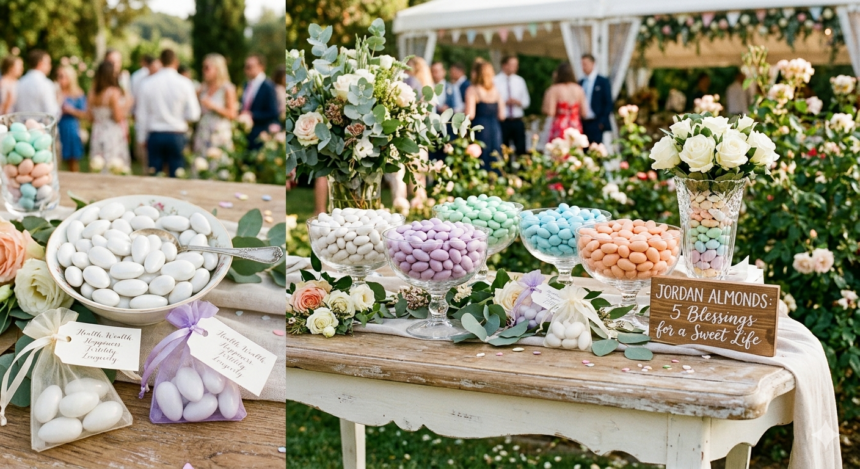
If you have ever attended a traditional wedding or a festive baby shower, you have likely encountered Jordan Almonds. These colorful, pastel-hued confections are more than just a snack; they are a staple of celebrations that stretch back centuries. With their distinct hard sugar shell and crunchy nut center, they represent a perfect marriage of texture and taste.
But what exactly makes these candies so special? Despite their simple appearance, Jordan Almonds carry a heavy weight of cultural significance, a complex manufacturing history, and a name that is actually a bit of a geographic mystery. In this guide, we will dive deep into the world of these “dragees” to see why they remain a favorite favor for hosts around the globe.
What Exactly Are Jordan Almonds?
At its most basic level, a Jordan Almond is a fresh, often roasted almond that has been encased in a hard, polished sugar coating. This process, known as panning, builds up layers of sweetness around the nut. The result is a candy that offers a satisfying “snap” when you bite into it, followed by the earthy, rich flavor of the almond inside.
While they are famously found in soft pastel shades like lavender, mint green, and baby blue, you can also find them in vibrant metallic golds or classic pearlescent white. The white variety is particularly popular for formal events, symbolizing purity and new beginnings.
The Mystery of the Name: Why “Jordan”?
One of the most common questions people ask is whether these nuts actually come from the Jordan River valley. Interestingly, the answer is likely no. While almonds certainly grow in the Middle East, the term “Jordan Almonds” is thought to be a linguistic evolution rather than a geographic label.
There are two primary theories that historians generally agree on:
-
The “Jardin” Theory: Many believe the name is a corruption of the French word jardin, meaning “garden.” This was used to distinguish cultivated “garden” almonds from their smaller, bitter wild counterparts.
-
The Spanish Influence: Others point toward the Spanish word jardín, which carries the same meaning. Over time, as these treats traveled across English-speaking trade routes, “jardin” morphed into the more familiar “Jordan.”
A History That Spans Millennia
The lineage of Jordan Almonds can be traced all the way back to ancient Rome. Around 177 BC, a Roman confectioner named Julius Dragatus is credited with creating an early version called dragati. Since refined sugar didn’t exist in Europe at the time, these early treats used honey to coat the nuts and seeds.
The Rise of Sugar and the Middle Ages
When the Crusades brought sugarcane back to Europe from the Middle East, the art of confectionery changed forever. Apothecaries in France began using sugar to coat bitter medicines, a process they called dragee. Eventually, they realized that coating almonds tasted significantly better than coating medicine, and the modern Jordan Almond was born.
By the Renaissance, these candies were a luxury item enjoyed by royalty. They were often served at the end of lavish feasts to aid digestion and provide a final “sweet note” to the evening.
The Symbolism of Five: Why We Give Them at Weddings
If you’ve ever received a small organza bag filled with Jordan Almonds, you might have noticed there are almost always exactly five candies inside. This is not a coincidence; it is a deeply rooted Mediterranean tradition, particularly in Greek (koufeta) and Italian (confetti) cultures.
The number five is significant because it is an indivisible number, symbolizing that the new couple will never be divided. Each of the five almonds represents a specific wish for the bride and groom:
-
Health
-
Wealth
-
Happiness
-
Fertility
-
Longevity
The bitter taste of the raw almond represents the “bitterness” of life’s challenges, while the sugar coating represents the “sweetness” of the couple’s love. It is a poetic reminder that marriage is a journey of both highs and lows.
How Jordan Almonds Are Made: The Panning Process
Creating the perfect Jordan Almond is a labor-intensive process that requires patience and precision. High-quality confectioners use a technique called cold panning to ensure the nut stays crisp and the shell stays smooth.
The Step-by-Step Process
-
Selection: Only the finest, most uniform almonds are chosen. They are usually roasted or dried to remove excess moisture.
-
The Kettle: The almonds are placed into large, rotating stainless steel or copper kettles.
-
Layering: As the kettle spins, a liquid sugar syrup is slowly drizzled over the tumbling nuts.
-
Drying: Cool air is blown into the kettle to dry the sugar. This process is repeated dozens of times—sometimes up to 40 layers—to build a thick, durable shell.
-
Polishing: In the final stages, food-grade wax or glaze is added to give the Jordan Almonds their signature porcelain-like shine.
Nutritional Profile: Are They Good for You?
While we shouldn’t forget that these are candies, the core of the treat is a nutrient-dense nut. Almonds are widely considered a “superfood,” and even when they are wearing a sugar tuxedo, they still offer some benefits.
| Nutrient | Benefit |
| Healthy Fats | Monounsaturated fats that support heart health. |
| Vitamin E | A powerful antioxidant that protects cells from damage. |
| Fiber | Helps with digestion and keeps you feeling full. |
| Protein | Essential for muscle repair and energy. |
Of course, the sugar coating adds carbohydrates and calories, so it’s best to enjoy Jordan Almonds in moderation as a special treat rather than a daily snack.
Creative Ways to Use Jordan Almonds Today
While weddings are their traditional home, Jordan Almonds are incredibly versatile. Their uniform shape and beautiful colors make them a favorite for DIY crafters and bakers.
-
Easter “Nest” Cupcakes: Use toasted coconut to create a “nest” on top of a cupcake and place three blue or white almonds in the center to look like robin’s eggs.
-
Floral Centerpieces: Fill a clear glass vase with layers of pastel almonds to create a colorful base for a floral arrangement.
-
Themed Party Favors: Match the candy colors to your event—pink and white for a girl’s baby shower, or gold and silver for a 50th anniversary.
-
Edible Insects: With a little royal icing, you can use the almond shape to create the bodies of butterflies or bumblebees for kids’ birthday cakes.
Buying and Storing Your Treats
To get the best experience, you want to ensure your Jordan Almonds are fresh. Over time, the sugar shell can become brittle or the almond inside can turn stale.
-
Check the Shell: High-quality almonds have a shell that is firm but doesn’t feel like a rock. If it feels like you might break a tooth, the candy may be old or poorly made.
-
Storage: Keep them in a cool, dry place. Humidity is the enemy of the sugar shell; it can cause the colors to bleed or the surface to become sticky.
-
Shelf Life: When stored properly in an airtight container, they can last for 6 to 12 months.
Conclusion: A Timeless Confection
The Jordan Almond is a rare example of a candy that has survived for thousands of years without losing its charm. Whether you appreciate them for their crunchy texture, their vibrant colors, or the beautiful “five blessings” they represent, they remain a quintessential symbol of celebration.
Next time you see a bowl of these pastel delights, take a moment to appreciate the history and craftsmanship behind every bite. From the ancient Roman dragati to the modern wedding favor, Jordan Almonds continue to bring a little bit of sweetness to life’s most important milestones.
Frequently Asked Questions (FAQs)
1. Are Jordan Almonds gluten-free?
In their traditional form, Jordan Almonds are made with almonds, sugar, and cornstarch, which are naturally gluten-free. However, some manufacturers use wheat-based thickeners or process the candies in facilities that handle wheat. Always check the packaging for a certified gluten-free label if you have a sensitivity.
2. Why are the shells so hard?
The hard shell is the result of multiple layers of sugar syrup being dried and crystallized. This “armor” was originally designed to protect the nut from spoilage before modern packaging existed. If they feel excessively hard, they may be lower quality or simply very old.
3. Can I eat Jordan Almonds if I have a nut allergy?
No. Since the core of the candy is a whole almond, they are unsafe for anyone with a tree nut allergy.
4. What is the difference between Jordan Almonds and “Confetti”?
In Italy, Jordan Almonds are called confetti. While the English word “confetti” refers to small pieces of paper thrown at celebrations, the Italian word specifically refers to these sugar-coated treats. Both are thrown or given at weddings to celebrate the occasion!
5. Why are they often served in pastel colors?
The pastel colors originally helped identify different flavors or qualities of almonds. Today, it is largely a matter of tradition and aesthetics; the soft colors are associated with spring, renewal, and celebrations like weddings and baptisms.